
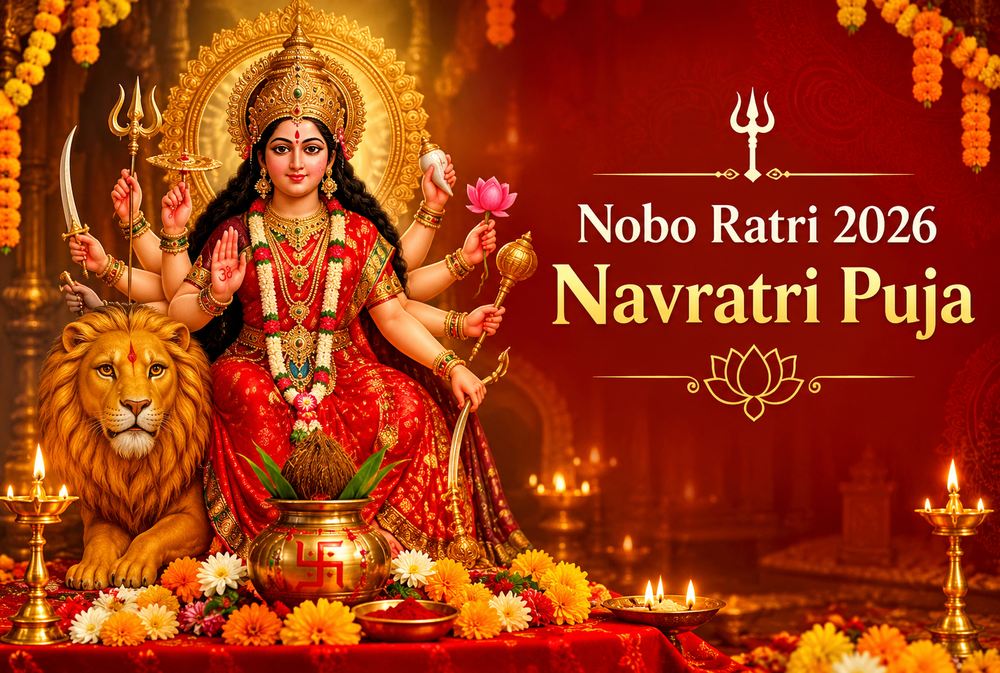
Nobo Ratri, also known as Navratri or Navaratri, is one of the most spiritually significant Hindu festivals dedicated to Maa Durga and her divine forms. The festival is traditionally observed over nine nights and ten days, with devotees performing prayers, puja, fasting, meditation and other religious rituals.
Nobo Ratri 2026 is an important occasion for devotees who wish to seek the blessings of Maa Durga, perform special spiritual practices and observe the traditional rituals associated with the festival.
What is Nobo Ratri?
The term Nobo Ratri refers to the nine sacred nights dedicated to the worship of the Divine Mother. In different regions of India, the festival may be celebrated according to different traditions and customs.
During Navratri, devotees worship different manifestations of Maa Durga on different days. Each form represents a particular divine quality and is associated with spiritual strength, protection, wisdom and prosperity.
The festival is also known as Navaratri, and the spelling may vary depending on regional and individual search preferences.
Nobo Ratri Puja
Nobo Ratri Puja is performed with devotion and according to traditional religious practices. The exact procedure may vary depending on the tradition, region and family customs.
A typical Navratri Puja may include:
- Sankalpa or taking a spiritual vow
- Kalash Sthapana
- Invocation of Maa Durga
- Offering flowers and fruits
- Lighting a diya
- Offering incense
- Recitation of Durga mantras
- Reading Durga-related scriptures
- Aarti
- Prasad offering
Devotees may also observe fasting during the festival as part of their spiritual discipline.
Nobo Ratri 2026
Nobo Ratri 2026 will be observed according to the Hindu lunar calendar. The exact dates and timings can vary depending on the regional calendar and location.
Those planning a Nobo Ratri Puja 2026 should check the local Panchang for the appropriate tithi, puja timing and other auspicious timings.
For important religious ceremonies, devotees often consult a knowledgeable priest or astrologer to understand the appropriate procedure according to their tradition.
Nine Forms of Maa Durga During Navratri
One of the central traditions of Navratri is worshipping the nine forms of Maa Durga, collectively known as Navadurga.
The nine forms are:
- Maa Shailputri
- Maa Brahmacharini
- Maa Chandraghanta
- Maa Kushmanda
- Maa Skandamata
- Maa Katyayani
- Maa Kalaratri
- Maa Mahagauri
- Maa Siddhidatri
Each form has its own religious significance and is traditionally worshipped on a particular day of Navratri.
Navratri Puja 2026
During Navratri Puja 2026, devotees may perform daily prayers dedicated to the corresponding form of Maa Durga.
The puja can include flowers, fruits, sweets, incense, lamps and other traditional offerings. Many devotees also recite Durga mantras and participate in evening aarti.
The specific Navratri Puja procedure can differ according to family traditions and regional customs, so it is useful to follow an established ritual method.
Navratri Fasting
Fasting is another important practice during Navratri. Some devotees observe a complete fast, while others consume permitted foods such as fruits, milk and specific fasting preparations.
Fasting practices differ considerably between communities. Anyone with dietary or medical restrictions should follow appropriate professional advice rather than adopting a restrictive fast solely because of religious custom.
Navratri Mantra
Devotees may recite different mantras during Navaratri. One commonly recited Durga mantra is:
“Om Dum Durgayai Namah”
The mantra is traditionally associated with Maa Durga and may be repeated during meditation or puja.
Devotees may also recite Durga Saptashati, Devi Kavach and other traditional prayers according to their religious practice.
Significance of Navaratri
The spiritual significance of Navratri is connected with devotion, inner strength and the worship of Shakti, the divine feminine power.
For devotees, the nine days provide an opportunity to:
- Spend more time in prayer and meditation
- Worship Maa Durga
- Follow spiritual discipline
- Observe fasting according to tradition
- Participate in religious ceremonies
- Seek blessings for peace and prosperity
The festival is also celebrated through cultural activities, devotional music, dance and community gatherings in many parts of India.
How to Prepare for Nobo Ratri Puja 2026
Those planning Nobo Ratri Puja 2026 can prepare in advance by:
- Cleaning the puja area.
- Arranging the required puja materials.
- Checking the local Panchang for the relevant dates and timings.
- Deciding which form of Maa Durga will be worshipped each day.
- Preparing flowers, fruits, lamps and other traditional offerings.
- Learning the required mantras and prayers.
- Consulting a priest if a detailed traditional puja or special anushthan is planned.
Nobo Ratri and Maa Durga
Nobo Ratri is ultimately a festival of devotion and the worship of Shakti. The nine nights encourage devotees to focus on spiritual practices and seek the blessings of Maa Durga.
Whether you call it Nobo Ratri, Navratri, Navaratri, or Navratri Puja, the festival holds an important place in Hindu religious traditions.
Those wishing to perform a special Navratri Puja 2026 should follow their family or regional tradition and verify the exact dates and puja timings from a reliable local Panchang.
Conclusion
Nobo Ratri 2026 is an important period for devotees of Maa Durga. Through Nobo Ratri Puja, prayer, fasting, mantra recitation and other traditional practices, devotees observe these sacred nine nights with faith and devotion.
Understanding the rituals, the nine forms of Maa Durga and the appropriate puja procedure can help devotees observe Navratri 2026 in a meaningful and traditional manner.