
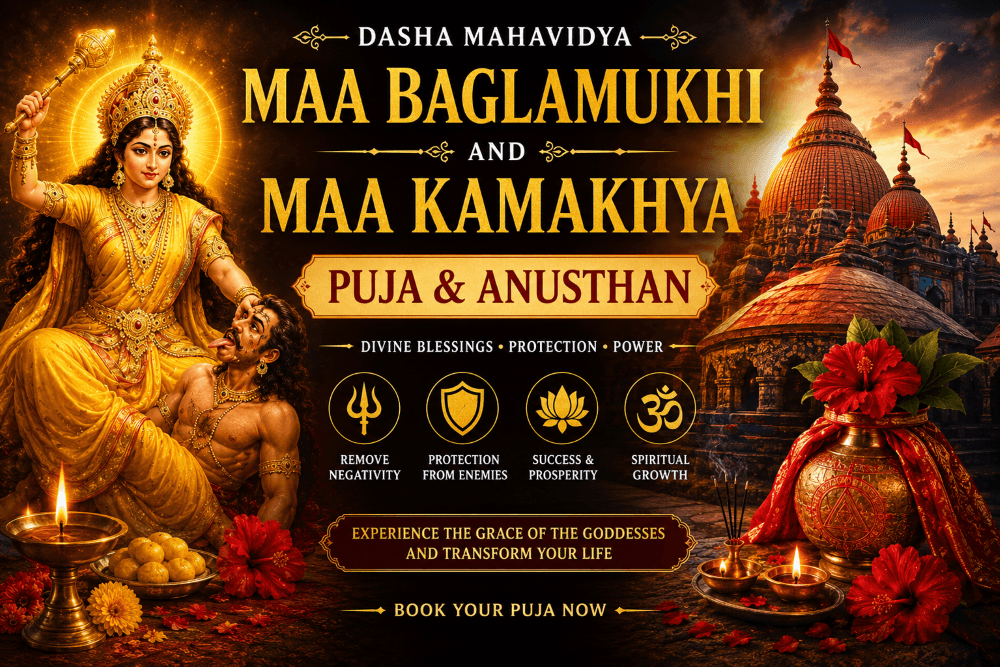
In Hindu spiritual traditions, certain forms of Shakti worship are especially associated with inner strength, protection, discipline and spiritual transformation. Maa Baglamukhi Puja and Maa Kamakhya Puja are among the important forms of Devi worship performed by devotees seeking divine blessings and spiritual guidance.
Along with these practices, Dasha Mahavidya Anusthan holds a special place in Shakta traditions. The Dasha Mahavidyas represent ten powerful manifestations of the Divine Mother, each associated with different spiritual qualities and forms of Shakti.
For devotees who wish to perform these rituals but cannot personally visit a temple or sacred place, professionally arranged puja and anusthan services can provide an organised way to participate.
What Is Maa Baglamukhi Puja?
Maa Baglamukhi is traditionally regarded as one of the Dasha Mahavidyas. She is associated with spiritual power, protection, concentration and the ability to overcome difficult circumstances.
Maa Baglamukhi Puja is performed according to specific traditional rituals, mantras, offerings and worship procedures. Depending on the purpose and tradition followed by the practitioner, the anusthan may include sankalp, mantra recitation, homa or havan, offerings and concluding prayers.
Devotees traditionally approach Maa Baglamukhi for blessings related to:
- Protection from negativity
- Inner strength and confidence
- Better concentration and discipline
- Peace during challenging situations
- Spiritual development
- Strength to face obstacles
It is important to understand that spiritual practices should not be treated as a guaranteed solution to financial, legal, medical or personal problems. Their primary purpose is devotional and spiritual.
Baglamukhi Puja Anusthan: How Is It Performed?
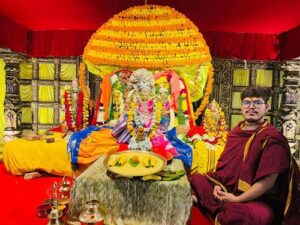
A Baglamukhi Puja Anusthan generally begins with a sankalp, where the devotee’s intention for the worship is formally stated. The priest or practitioner then performs the required purification rituals followed by Devi worship and mantra recitation.
Depending on the specific tradition, the anusthan may include:
- Ganesh Puja
- Sankalp
- Kalash Sthapana
- Maa Baglamukhi Puja
- Mantra Japa
- Havan or Homa
- Special offerings
- Aarti and Prasad
- Completion of the Anusthan
The exact procedure can vary according to the priest, spiritual tradition, location and purpose of the puja.
Why Do People Choose Baglamukhi Puja Booking?
Many devotees want to perform the ritual but may not have the time, resources or knowledge required to organise every aspect themselves. This is where Baglamukhi Puja Booking services can be useful.
When choosing a puja service, devotees should check:
- Who will perform the puja
- Where the puja will be performed
- What rituals are included
- Whether a sankalp is taken in the devotee’s name
- Whether photographs or videos of the ritual are provided
- What materials and offerings are included
- Whether the service provides clear booking details
A transparent puja service should explain the ritual and charges clearly rather than making unrealistic promises.
Maa Kamakhya Puja and Its Spiritual Significance
The sacred tradition of Maa Kamakhya Puja is deeply connected with Shakta worship and the famous Kamakhya Temple in Assam. Maa Kamakhya is revered as an important manifestation of the Divine Feminine and is closely associated with Shakti traditions.
For devotees, worship of Maa Kamakhya can be an opportunity for prayer, devotion and spiritual reflection.
A traditional Maa Kamakhya Puja may involve Devi invocation, offerings, mantra recitation, prayers and other rituals depending on the particular form of worship.
Devotees may choose Kamakhya worship when they wish to deepen their connection with Shakti and seek blessings for spiritual growth, peace and strength.
Kamakhya Puja Booking: What Should You Know?
If you are considering Kamakhya Puja Booking, select a service that provides complete information before payment.
Ask about:
- Puja date and timing
- Name and details required for sankalp
- Type of puja being performed
- Temple or puja location
- Rituals included in the package
- Prasad arrangements
- Confirmation after completion
- Photo or video availability, if offered
This helps devotees understand exactly what they are booking and avoids confusion later.
What Is Dasha Mahavidya Anusthan?
The Dasha Mahavidya Anusthan is associated with the ten principal manifestations of the Divine Mother in Shakta traditions. The ten Mahavidyas are traditionally identified as:
- Maa Kali
- Maa Tara
- Maa Tripura Sundari
- Maa Bhuvaneshwari
- Maa Bhairavi
- Maa Chhinnamasta
- Maa Dhumavati
- Maa Baglamukhi
- Maa Matangi
- Maa Kamala
Each form carries its own symbolism, spiritual meaning and traditional method of worship.
Because the practices connected with the Mahavidyas can involve specific mantras and rituals, they should ideally be performed under the guidance of a knowledgeable practitioner familiar with the relevant tradition.
Maa Baglamukhi and Maa Kamakhya: Which Puja Should You Choose?
There is no single puja that is appropriate for every devotee. The choice should depend on personal faith, spiritual intention and guidance from a qualified priest or practitioner.
Maa Baglamukhi Puja may appeal to devotees particularly interested in traditional worship associated with protection, focus and overcoming challenging circumstances.
Maa Kamakhya Puja may be preferred by devotees who feel a strong connection with Shakti worship and the Kamakhya tradition.
For those interested in the broader Shakta path, a Dasha Mahavidya Anusthan can provide a more comprehensive devotional approach to the ten forms of the Divine Mother.
How to Book a Puja Online
Today, devotees can arrange many traditional rituals through online puja services. Before making a Baglamukhi Puja Booking or Kamakhya Puja Booking, compare the service details carefully.
A reliable booking process should normally include:
Step 1: Select the desired puja or anusthan.
Step 2: Choose an available date.
Step 3: Provide the devotee’s name and required sankalp details.
Step 4: Confirm the puja package and payment.
Step 5: Receive booking confirmation.
Step 6: Receive completion details after the ritual, where applicable.
The process should be simple, transparent and respectful of the devotee’s beliefs.
Experience the Divine Tradition of Shakti Worship
Maa Baglamukhi, Maa Kamakhya and the Dasha Mahavidyas occupy an important place in India’s rich Shakta heritage. For many devotees, these forms of worship represent faith, courage, devotion and a deeper connection with the Divine Mother.
Whether you are looking for Maa Baglamukhi Puja, a Baglamukhi Puja Anusthan, Maa Kamakhya Puja, or a Dasha Mahavidya Anusthan, choosing an authentic and transparent puja service is an important first step.
If you are ready to arrange a traditional puja, enquire about the available dates, rituals and booking process before confirming your Baglamukhi Puja Booking or Kamakhya Puja Booking.
Frequently Asked Questions
Is Maa Baglamukhi Puja performed online?
Yes. Some traditional puja services arrange the ritual on behalf of devotees who cannot attend physically. The exact process varies between service providers.
What is included in Baglamukhi Puja Anusthan?
It may include sankalp, Devi worship, mantra japa, offerings, havan and concluding prayers. The exact inclusions should be confirmed before booking.
Can I book Maa Kamakhya Puja online?
Some service providers offer arrangements for devotees who cannot personally visit the sacred site. Always verify the location, ritual details and booking terms.
What is Dasha Mahavidya Anusthan?
It is a Shakta devotional practice connected with the ten Mahavidyas, including Maa Baglamukhi and Maa Kamakhya.
How do I choose the right puja?
Consider your spiritual intention, personal faith and the guidance of a knowledgeable priest or practitioner. Avoid services that promise guaranteed worldly results.