
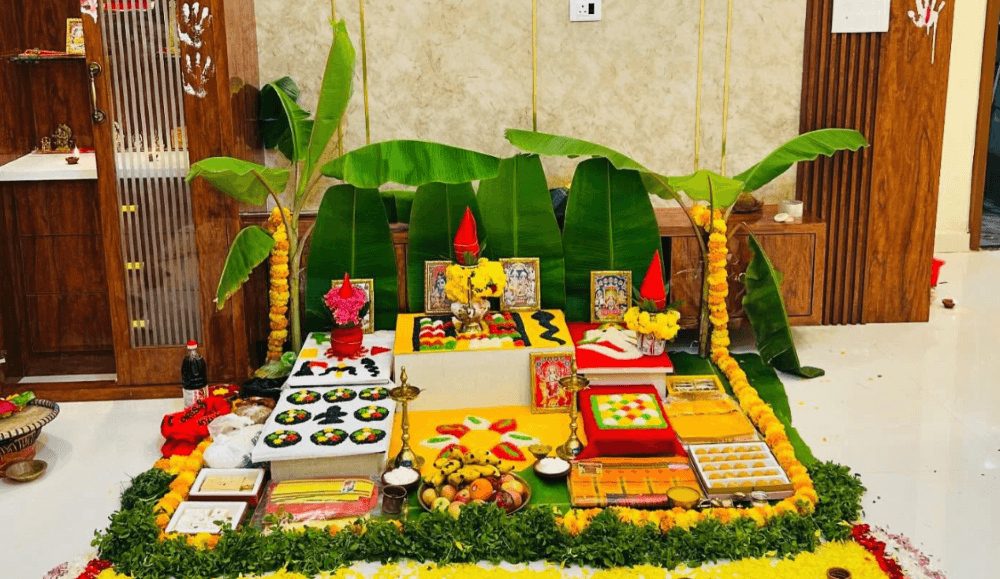
Moving into a new home is one of the most meaningful milestones in life. In Hindu tradition, entering a newly built or newly purchased house is often accompanied by Griha Pravesh Puja, a sacred ceremony performed to seek divine blessings and begin life in the new home with positive intentions.
Griha Pravesh is more than simply moving furniture into a property. Traditionally, the ceremony involves prayers to deities, purification rituals, Vastu-related worship, Havan and other rituals according to the family’s tradition.
Choosing an appropriate Griha Pravesh Muhurat is also considered important in traditional Hindu practice. The date and time may be selected according to Panchang and, in some cases, the family’s birth details and astrological considerations.
This complete guide explains what Griha Pravesh Puja is, how to choose Griha Pravesh Muhurat, the important rituals, required Samagri, benefits and practical tips for performing the ceremony successfully.
What Is Griha Pravesh Puja?
Griha Pravesh Puja is a traditional Hindu ceremony performed before or while entering a new home.
The Sanskrit term “Griha” means home or house, while “Pravesh” means entering. The ceremony therefore symbolically represents entering a home with prayers, blessings and auspicious intentions.
Depending on the family’s tradition, Griha Pravesh may include:
- Ganesh Puja
- Kalash Sthapana
- Vastu Puja
- Navagraha Puja
- Havan
- Lakshmi Puja
- Invocation of the family deity
- Aarti
- Prasad distribution
The exact rituals can vary according to region, family tradition and the type of property.
Why Is Griha Pravesh Puja Performed?
Traditionally, a home is considered more than a physical structure. It is the space where family members live, worship, work and build their future.
The purpose of Griha Pravesh Puja is to begin life in the new home with prayer and devotion.
Families may perform the ceremony to:
- Seek blessings for the household
- Begin life in the new home auspiciously
- Perform traditional Vastu-related worship
- Pray for family harmony and well-being
- Express gratitude
- Mark an important new beginning
- Create a peaceful devotional atmosphere
These are traditional religious purposes rather than guarantees of particular material outcomes.
What Is Griha Pravesh Muhurat?
Griha Pravesh Muhurat refers to an auspicious date and time traditionally selected for entering a new home and performing the associated rituals.
In Hindu Panchang traditions, the suitability of a Muhurat may be assessed using factors such as:
- Tithi
- Nakshatra
- Vara or weekday
- Yoga
- Karana
- Lunar position
- Other Panchang considerations
Some families also consult an astrologer for a personalised Muhurat based on their birth details.
The exact rules can differ between regional Panchangs and traditions. Therefore, a date considered auspicious in one calendar may not necessarily be the preferred date under another tradition.
Why Is Griha Pravesh Muhurat Important?
Selecting a Muhurat is traditionally believed to provide an auspicious beginning for entering the home.
The ceremony is intended to align the beginning of household life with a favourable religious calendar.
However, practical considerations should also be taken into account. The house should be ready, basic utilities should be functioning and the family should be able to participate comfortably.
A good Muhurat should therefore be combined with sensible planning and safe preparation.
Types of Griha Pravesh
Traditional Hindu practices may describe different circumstances in which Griha Pravesh is performed.
- Apoorva Griha Pravesh
This generally refers to entering a newly constructed house for the first time.
It is the type most people associate with a traditional new-home Griha Pravesh ceremony.
- Sapoorva Griha Pravesh
This may refer to returning to a previously occupied home after a period of absence, depending on the tradition being followed.
- Dwandwah Griha Pravesh
This category is traditionally associated with re-entering or reoccupying a home after reconstruction or significant circumstances.
Different texts and regional traditions may use these categories somewhat differently.
For a specific situation, it is best to consult a knowledgeable priest or astrologer.
How to Choose Griha Pravesh Muhurat
Choosing the right Griha Pravesh Muhurat should involve more than simply selecting a date from a random online list.
A traditional Muhurat calculation may consider the Panchang of the location where the house is situated.
Important considerations may include:
Tithi
Certain lunar dates are traditionally considered more suitable for auspicious ceremonies than others.
Nakshatra
The Nakshatra prevailing at the chosen time may also be considered while selecting a Muhurat.
Weekday
Certain weekdays are traditionally preferred for particular auspicious activities.
Lunar Considerations
The Moon’s position can be considered as part of the overall Muhurat analysis.
Location
The local sunrise, sunset and Panchang calculations depend on the geographical location of the property.
Therefore, the Muhurat should be calculated for the location of the new home rather than simply copying a time from another city.
Best Time for Griha Pravesh
There is no single Griha Pravesh Muhurat that is suitable for every family and every location.
The preferred date and time can change depending on the year, region, Panchang and specific circumstances.
Some traditional Panchang systems identify certain months and Nakshatras as more suitable for Griha Pravesh, while certain periods may be avoided.
For this reason, if you want an exact Muhurat, it is better to have it calculated specifically for your location and intended year.
What Is Included in Griha Pravesh Puja?
A complete Griha Pravesh Puja may include several smaller rituals.
The exact sequence depends on the priest and family tradition.
Ganesh Puja
Lord Ganesha is traditionally worshipped at the beginning of many Hindu ceremonies.
The Puja seeks blessings for an auspicious and obstacle-free beginning.
Kalash Sthapana
A sacred Kalash is prepared and installed as part of the ceremony.
The Kalash has an important symbolic role in many Hindu rituals.
Vastu Puja
Vastu-related worship may be performed to honour the traditional principles associated with the home and its environment.
The ritual can vary depending on the property and the family’s tradition.
Navagraha Puja
Some Griha Pravesh ceremonies include Navagraha worship.
This involves prayers associated with the nine planetary influences recognised in Vedic astrology.
Havan
A sacred fire ritual may be performed as part of Griha Pravesh.
Mantras and prescribed offerings are made into the Havan fire according to the ritual tradition.
Lakshmi Puja
Some families perform Lakshmi Puja during or around the housewarming ceremony as a devotional prayer for prosperity and household well-being.
Aarti and Prasad
The ceremony generally concludes with Aarti and distribution of Prasad among family members and guests.
Griha Pravesh Puja Samagri
The exact Griha Pravesh Puja Samagri depends on the rituals included.
Commonly required items may include:
- Kalash
- Coconut
- Mango leaves
- Rice or Akshat
- Kumkum
- Turmeric
- Chandan
- Flowers
- Garland
- Fruits
- Betel leaves
- Betel nuts
- Ghee
- Havan Samagri
- Sacred wood
- Camphor
- Incense
- Cotton wicks
- Panchamrit ingredients
- Water
- Milk
- Honey
- Curd
- Sugar
- Coins
- Moli or Kalava
- Puja utensils
- Deity-specific offerings
The priest should provide the final list because a Vastu Puja, Ganesh Puja, Navagraha Puja and Havan may each require additional materials.
Griha Pravesh Puja Step-by-Step
The exact procedure varies, but a traditional ceremony may follow a sequence similar to the following.
Step 1: Prepare and Clean the Home
Before the ceremony, the house should be cleaned thoroughly.
Remove construction waste, unnecessary objects and dust.
Ensure electricity, water, ventilation and other essential facilities are functioning.
Step 2: Decorate the Entrance
Many families decorate the entrance with flowers, traditional motifs, Rangoli or other auspicious symbols.
The purpose is both devotional and ceremonial.
Step 3: Enter With the Kalash
According to the family’s tradition, the householder may enter carrying a prepared Kalash or other sacred items.
The priest guides the family through the appropriate procedure.
Step 4: Perform Ganesh Puja
Ganesh Puja is performed to begin the ceremony with prayers to Lord Ganesha.
Step 5: Perform Vastu Puja
Vastu-related prayers are performed according to the selected tradition.
Step 6: Perform Navagraha Puja
If included, the Navagraha Puja is performed with the prescribed mantras and offerings.
Step 7: Perform Havan
The sacred fire is established and offerings are made while appropriate mantras are recited.
Step 8: Perform Lakshmi or Family Deity Worship
Depending on family tradition, Lakshmi Puja or worship of the Kuladevata/Kuldevi may be included.
Step 9: Aarti
The family participates in Aarti and prayers.
Step 10: Prasad and Meal
Prasad may be distributed, and some families organise a meal or invite relatives and guests after the ceremony.
Important Things to Do Before Griha Pravesh
Proper preparation can make the ceremony smoother.
Complete Major Construction Work
Ideally, essential construction and major repair work should be completed before the ceremony.
Clean the Entire Property
The house should be thoroughly cleaned before the Puja.
Arrange Puja Samagri
Prepare the Samagri in advance rather than searching for items during the ceremony.
Confirm the Priest
If you require a priest, confirm the date, time, ceremony type and expected duration beforehand.
Confirm the Muhurat
Make sure the selected Muhurat is appropriate for the location of the house.
Prepare for Guests
If relatives or friends are attending, arrange seating, Prasad and other practical requirements in advance.
Can Griha Pravesh Be Performed Without a Priest?
A simple home prayer can certainly be performed by family members according to their tradition.
However, a complete Griha Pravesh Puja involving Vastu Puja, Navagraha worship, Havan and specific Vedic mantras is generally better performed under the guidance of a trained priest.
A knowledgeable priest can guide the family through the sequence, mantras, Sankalp and offerings.
If you need assistance with housewarming rituals, you can explore House Puja / Vastu services for professional guidance.
Griha Pravesh and Vastu Shastra
Griha Pravesh and Vastu are closely associated in many traditional housewarming ceremonies.
Vastu Shastra considers the orientation and arrangement of a property in relation to directions and natural elements.
A Vastu assessment may consider:
- Main entrance
- Kitchen
- Bedrooms
- Puja room
- Bathrooms
- Staircase
- Centre of the property
- Plot orientation
- Surrounding environment
However, Vastu recommendations should be tailored to the actual property rather than applying one universal rule to every home.
What Should Not Be Done on Griha Pravesh Day?
Families following traditional practices may avoid certain activities on the day of Griha Pravesh.
Common practical recommendations include:
- Do not leave the house unprepared.
- Avoid unnecessary clutter during the ceremony.
- Keep the Puja area clean.
- Avoid interrupting the Muhurat unnecessarily.
- Keep fire-related rituals away from flammable materials.
- Ensure children are supervised around the Havan Kund.
- Avoid rushing the ceremony.
Different religious traditions may have additional customs.
Benefits of Griha Pravesh Puja
The traditional benefits of Griha Pravesh Puja are primarily spiritual and cultural.
Auspicious Beginning
The ceremony symbolically marks the beginning of life in the new home.
Family Togetherness
Family members participate in prayers and rituals together.
Spiritual Environment
Mantras, prayers and devotional activities can create a peaceful ceremonial atmosphere.
Vastu-Related Worship
Vastu Puja allows families following the tradition to formally acknowledge the home’s spatial and environmental principles.
Gratitude
The ceremony provides an opportunity to express gratitude for the new home and seek blessings for the future.
Griha Pravesh Puja for an Apartment or Flat
Griha Pravesh is not limited to independent houses.
A family can perform a traditional housewarming ceremony when moving into a new apartment or flat.
The rituals can be adapted to the available space.
If a full Havan is not practical inside the apartment, the priest can advise on a safe and appropriate arrangement.
Fire safety and building regulations should always be respected.
Can Griha Pravesh Be Performed in a Rented House?
Families may also perform a simple Griha Pravesh-style prayer when entering a rented home.
The exact ceremony depends on personal beliefs and family tradition.
A smaller Puja, Ganesh worship or simple house blessing may be appropriate when a full ceremony is not practical.
Final Thoughts on Griha Pravesh Puja
Griha Pravesh Puja is a traditional way of marking the beginning of life in a new home with prayer, devotion and family participation.
Choosing a suitable Griha Pravesh Muhurat, preparing the Puja Samagri, performing Ganesh Puja, Vastu Puja, Havan and other traditional rituals can make the occasion meaningful for the family.
At the same time, practical preparation is equally important. The home should be safe, clean and ready for occupation, and fire rituals should always be performed responsibly.
Because Muhurat rules and religious procedures can vary between Panchangs and traditions, families looking for an exact date and personalised ritual can consult an experienced priest or astrologer.
If you are planning to move into a new house and want guidance with the ceremony, House Puja / Vastu services can help you plan the appropriate Puja, Muhurat and rituals according to your requirements.
Frequently Asked Questions About Griha Pravesh Puja
What is Griha Pravesh Puja?
Griha Pravesh Puja is a traditional Hindu housewarming ceremony performed when entering a new or newly acquired home. It may include Ganesh Puja, Vastu Puja, Havan, Navagraha Puja and other rituals.
What is Griha Pravesh Muhurat?
Griha Pravesh Muhurat is an auspicious date and time traditionally selected for entering a new home. It may be calculated using Panchang factors such as Tithi, Nakshatra and other astrological considerations.
Is Griha Pravesh Muhurat the same for every city?
Not necessarily. Local sunrise, sunset and Panchang calculations can affect Muhurat timings. Therefore, the location of the property should be considered when selecting the exact time.
What Puja is performed during Griha Pravesh?
Common rituals include Ganesh Puja, Kalash Sthapana, Vastu Puja, Navagraha Puja, Havan, Lakshmi Puja and Aarti. The exact combination depends on the family’s tradition.
What Samagri is required for Griha Pravesh Puja?
Common items include Kalash, coconut, mango leaves, rice, flowers, fruits, turmeric, kumkum, sandalwood, ghee, Havan Samagri and other Puja materials. The priest should provide the final list for the specific ceremony.
Can Griha Pravesh be performed in a flat?
Yes. Griha Pravesh can be performed in an apartment or flat. The ritual can be adapted according to the available space and building safety requirements.
Is Havan necessary for Griha Pravesh?
Havan is commonly included in many traditional Griha Pravesh ceremonies, but the exact rituals depend on the family’s tradition and the priest’s guidance.
Can Griha Pravesh be performed without a priest?
A simple prayer can be performed by family members. However, a complete Vedic Griha Pravesh Puja involving specific mantras and rituals is generally better conducted with a trained priest.