
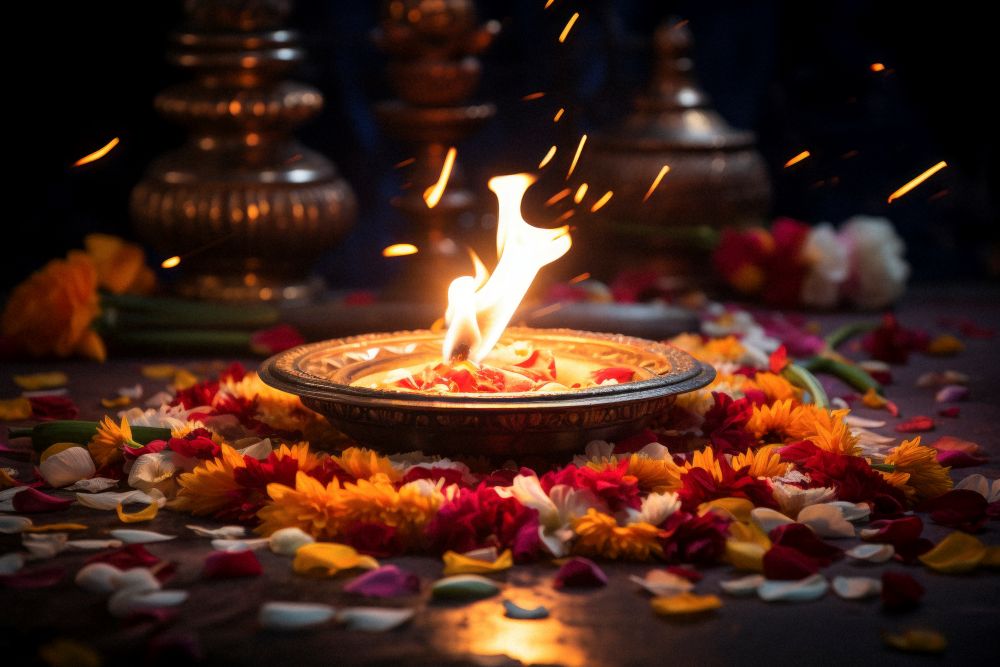
A Havan at home is a traditional Vedic fire ritual performed with sacred offerings, mantras and prayers. Also known as Homa or Havan Puja, it has been an important part of Hindu spiritual traditions for centuries.
Families perform Havan on different occasions, including housewarming ceremonies, festivals, weddings, birthdays, religious observances and special Sankalp-based pujas. Many people also choose to perform Havan at home when they want to create a peaceful and devotional atmosphere.
The ritual involves offering selected substances into a sacred fire while chanting specific Vedic mantras. The type of Havan, the mantras and the Havan Samagri can vary according to the purpose of the ceremony and the religious tradition being followed.
This guide explains the benefits of Havan, different types of Havan, essential Puja Samagri and how a traditional Havan Puja is performed at home.
What Is Havan at Home?
Havan at home is a Vedic fire ritual performed in a designated sacred space within a residence.
A small fire, known as Agni, is established in a Havan Kund. Offerings such as ghee, herbs, grains, wood and other prescribed materials are placed into the fire while the priest or participants recite appropriate mantras.
In Vedic tradition, Agni is regarded as an important medium through which offerings are presented during a Yajna.
The exact procedure depends on the purpose of the ceremony. A simple household Havan may be relatively short, while a detailed ritual may involve several preliminary prayers, deity worship, Sankalp, mantra recitation and concluding ceremonies.
Why Do People Perform Havan Puja?
People perform Havan Puja for both spiritual and religious reasons.
Common purposes include:
- Seeking divine blessings
- Beginning a new phase of life
- Performing a housewarming ceremony
- Observing religious festivals
- Praying for family well-being
- Supporting a spiritual or devotional practice
- Performing a Sankalp-based ritual
- Expressing gratitude
- Creating a peaceful devotional atmosphere
The intention behind the ritual is an important part of traditional practice.
Benefits of Havan
The benefits of Havan are traditionally understood in spiritual, devotional and cultural terms. It is important not to treat religious claims as guaranteed medical or scientific outcomes.
- Creates a Peaceful Spiritual Atmosphere
One of the most commonly valued benefits of Havan is the devotional atmosphere created during the ceremony.
The sound of mantras, presence of Agni and participation of family members can encourage concentration, prayer and mindfulness.
- Encourages Positive and Focused Thinking
A Havan requires people to sit together, listen to mantras and participate in a structured ritual.
This can provide an opportunity to slow down from everyday activities and focus on prayer and positive intentions.
- Strengthens Family Participation
Performing a Havan at home can bring family members together for a shared spiritual activity.
Participating in the Sankalp and offerings can create a sense of togetherness and strengthen family traditions.
- Supports Spiritual Discipline
Regular prayer and ritual can help individuals develop consistency in their spiritual practices.
Havan may be included as part of a larger devotional routine depending on the family’s beliefs and traditions.
- Traditionally Associated With Purification
In Hindu traditions, fire rituals are often associated with purification.
The ritual symbolism focuses on offering, transformation and devotion. Many families perform Havan when entering a new home or beginning an important chapter of life.
- Marks Important Life Events
Havan is frequently performed during important occasions such as Griha Pravesh, marriage-related ceremonies, religious festivals and other auspicious events.
It can provide a sacred beginning to a significant occasion.
- Encourages Gratitude and Prayer
A Havan provides a structured opportunity to express gratitude and seek blessings.
The Sankalp allows participants to consciously dedicate the ritual to a particular intention.
Does Havan Purify the Air?
You may find claims online that every Havan automatically purifies indoor air or eliminates harmful microorganisms.
Such claims should be treated carefully. Burning materials indoors can also produce smoke and particulate matter.
Therefore, if you perform Havan at home, ensure adequate ventilation and follow fire-safety precautions.
The spiritual significance of Havan should be distinguished from claims about medical or environmental benefits that may not be established for every ritual or ingredient.
Types of Havan
There are many forms of Havan in Hindu traditions. The appropriate ritual depends on the purpose, deity, Sampradaya and family tradition.
- Ganesh Havan
Ganesh Havan is traditionally performed to seek the blessings of Lord Ganesha before beginning an important activity.
It may be performed during new beginnings, ceremonies, housewarming and other auspicious occasions.
- Navagraha Havan
Navagraha Havan is associated with the nine planetary influences recognised in Vedic astrology.
Families may perform it as part of a broader Navagraha Puja or astrological remedial ritual.
- Lakshmi Havan
Lakshmi Havan is performed as a devotional ritual dedicated to Goddess Lakshmi.
It is commonly associated with prayers for prosperity, abundance and household well-being.
- Durga Havan
Durga Havan is performed as part of worship dedicated to Goddess Durga.
It may be included in Navratri worship or other Devi-related religious ceremonies.
- Maha Mrityunjaya Havan
This Havan is associated with Lord Shiva and the Maha Mrityunjaya Mantra.
Devotees traditionally perform the ritual for spiritual strength, peace and divine blessings.
- Vastu Havan
A Vastu-related Havan may be performed during or around a housewarming ceremony or when a family follows traditional Vastu-based rituals.
The purpose is generally devotional and associated with seeking harmony and blessings for the home.
- Griha Pravesh Havan
Griha Pravesh Havan is traditionally performed when entering a newly constructed or newly acquired home.
It is often conducted as part of a larger Griha Pravesh Puja.
- Satyanarayan Puja Havan
Some traditions include Havan as part of a Satyanarayan Puja.
The exact procedure and whether Havan is included may vary according to the family tradition and the priest conducting the ceremony.
Havan Puja Samagri: What Is Needed?
The Havan Samagri depends on the specific ritual.
For a general household Havan, commonly used materials may include:
- Havan Kund
- Havan wood or suitable sacred wood
- Ghee
- Havan Samagri
- Camphor
- Sesame seeds
- Barley
- Rice or Akshat
- Dried herbs
- Flowers
- Fruits
- Sandalwood
- Kalash
- Water
- Kusha grass where prescribed
- Cotton wicks
- Incense
- Kumkum
- Turmeric
- Chandan
- Betel leaves
- Betel nuts
- Moli or Kalava
- Deity-specific offerings
Not every Havan requires every item on this list.
The priest should provide the final Samagri list according to the exact Puja being performed.
How Is Havan Performed at Home?
A traditional Havan at home generally follows a structured sequence.
The exact steps can vary according to the ritual and regional tradition.
Step 1: Clean the Puja Area
Choose a clean, suitable and well-ventilated location.
The area should be free from flammable materials, curtains and unnecessary objects.
Step 2: Set Up the Havan Kund
Place the Havan Kund on a stable, heat-resistant surface.
The size of the Kund should be appropriate for the space and the number of participants.
Step 3: Prepare the Puja Samagri
Arrange the required offerings, vessels, flowers, water, ghee and other materials before beginning the ritual.
Having everything ready helps the ceremony proceed smoothly.
Step 4: Perform Sankalp
The priest or person performing the ritual makes the Sankalp, stating the intention and purpose of the Havan.
This is an important part of the traditional ceremony.
Step 5: Invoke the Deity and Agni
Initial prayers are performed according to the specific tradition.
Agni is then respectfully established in the Havan Kund.
Step 6: Chant the Prescribed Mantras
The priest recites the appropriate mantras for the specific Havan.
Participants may repeat the mantras or respond according to the priest’s instructions.
Step 7: Make Offerings Into the Fire
Ghee, Havan Samagri and other prescribed offerings are offered into the sacred fire while the relevant mantras are recited.
The offerings should be made carefully and in the quantities recommended for the ritual.
Step 8: Complete the Main Offerings
The principal offerings depend on the purpose of the Havan.
A deity-specific Havan may include special ingredients and mantras.
Step 9: Purnahuti
The ceremony generally concludes with Purnahuti, the final offering.
This represents the completion of the main Havan ritual.
Step 10: Prayer and Aarti
The family may offer prayers and perform Aarti according to the tradition being followed.
Prasad may then be distributed among the participants.
Can You Perform Havan Without a Priest?
A simple devotional fire ritual may be performed by knowledgeable householders according to their family tradition.
However, more elaborate Vedic rituals can involve specific mantras, procedures, offerings and fire rituals that are better conducted under the guidance of a trained priest.
If the Havan is being performed for a specific religious or astrological purpose, having an experienced priest conduct the ceremony can help ensure that the appropriate procedure is followed.
For a personalised ceremony, you can consult Pandits for Havan and choose a suitable priest according to your requirements.
How Long Does a Havan at Home Take?
The duration depends on the type of Havan.
A simple household Havan may take less time, while a detailed ritual involving multiple deities, extensive mantra recitation and additional Puja procedures may take considerably longer.
The priest should provide an approximate duration when the ceremony is scheduled.
Best Time to Perform Havan at Home
The appropriate time depends on the purpose of the ritual.
For certain ceremonies, an astrologically selected Shubh Muhurat may traditionally be preferred.
For routine devotional practice, families may follow their own religious tradition.
If the Havan is connected with Griha Pravesh, marriage, a special Sankalp or astrological remedy, consulting a knowledgeable priest or astrologer can help determine the appropriate date and time.
Important Safety Tips for Havan at Home
Because Havan involves an open flame, fire safety should always be a priority.
Follow these precautions:
- Perform the Havan in a stable, safe location.
- Keep curtains, paper and other flammable materials away from the fire.
- Maintain adequate ventilation.
- Keep children supervised.
- Never leave the fire unattended.
- Keep water or an appropriate fire extinguisher accessible.
- Avoid excessive amounts of ghee or combustible materials.
- Make sure the fire is completely extinguished after the ceremony.
- Follow local fire-safety requirements where applicable.
Traditional rituals should always be performed without compromising household safety.
Havan at Home for a New House
A Havan is often included in traditional Griha Pravesh ceremonies.
When entering a new house, families may perform Ganesh Puja, Vastu-related worship, Kalash Puja and Havan according to their tradition.
The ceremony is generally intended to mark the beginning of life in the new home with prayers and blessings.
If you are planning a housewarming ceremony, it is useful to arrange the priest, Puja Samagri and Muhurat in advance.
Havan for Special Occasions
Havan may be performed for many occasions, including:
- Griha Pravesh
- Wedding ceremonies
- Religious festivals
- Birthdays
- Navratri
- Navagraha Puja
- Vastu Puja
- Spiritual observances
- Family religious ceremonies
- Specific Sankalp-based rituals
The mantras and offerings should be selected according to the purpose of the ceremony.
Why Choose Experienced Pandits for Havan?
A Havan involves more than simply lighting a fire and adding ingredients.
Traditional rituals may involve specific mantras, pronunciation, sequence, Sankalp, deity invocation and concluding procedures.
Experienced Pandits for Havan can help conduct the ceremony according to the relevant tradition and explain the procedure to family members.
This can be especially helpful for larger ceremonies where several rituals are performed together.
Final Thoughts on Havan at Home
A Havan at home is a meaningful traditional practice that combines sacred fire, mantra recitation, offerings and prayer.
The benefits of Havan are traditionally associated with spiritual purification, devotion, positive intention, family participation and creating a peaceful ceremonial atmosphere.
There are many types of Havan, including Ganesh Havan, Navagraha Havan, Lakshmi Havan, Durga Havan, Maha Mrityunjaya Havan, Vastu Havan and Griha Pravesh Havan.
The required Puja Samagri and procedure depend on the specific ritual. For a simple household ceremony, families may follow their established tradition, while more elaborate Vedic Havan rituals are generally better performed under the guidance of an experienced priest.
If you are planning a Havan for your home, Griha Pravesh, religious occasion or a specific Sankalp, arranging the right priest and Puja Samagri in advance can make the ceremony more organised and meaningful.
Frequently Asked Questions About Havan at Home
What is Havan at home?
Havan at home is a traditional Vedic fire ritual in which sacred offerings are made into a Havan Kund while appropriate mantras and prayers are recited.
What are the benefits of Havan?
Traditional benefits of Havan include creating a devotional atmosphere, encouraging focused prayer, supporting spiritual discipline, bringing family members together and marking important religious occasions.
What Samagri is required for Havan?
Common Havan Samagri includes ghee, suitable Havan wood, herbs, grains, sesame seeds, rice, flowers and other offerings. The exact list depends on the type of Havan.
Can I perform Havan at home myself?
A simple devotional ritual may be performed by a knowledgeable person according to their tradition. For specialised or elaborate Vedic rituals, an experienced priest is recommended.
How long does Havan Puja take?
The duration varies according to the type and complexity of the ritual. A simple Havan can be relatively short, while a detailed ceremony may take longer.
Which Havan is suitable for a new home?
Griha Pravesh Havan and Vastu-related Havan are commonly included in traditional housewarming ceremonies. The exact rituals depend on the family’s tradition.
Is Havan good for positive energy?
Many people perform Havan as a spiritual practice intended to create a peaceful and positive atmosphere. The experience can also encourage prayer, mindfulness and family participation.
Where can I find Pandits for Havan?
If you need an experienced priest for a home Havan, Griha Pravesh or another Vedic fire ritual, you can consult Pandits for Havan and discuss the ceremony, required Samagri and preferred date.